Ghorepani Poon Hill Trek
Recommended by
of travelers
Trip Facts
Highlights
Stunning sunrise view from Poon Hill at 3,210 m with panoramic Annapurna and Dhaulagiri views
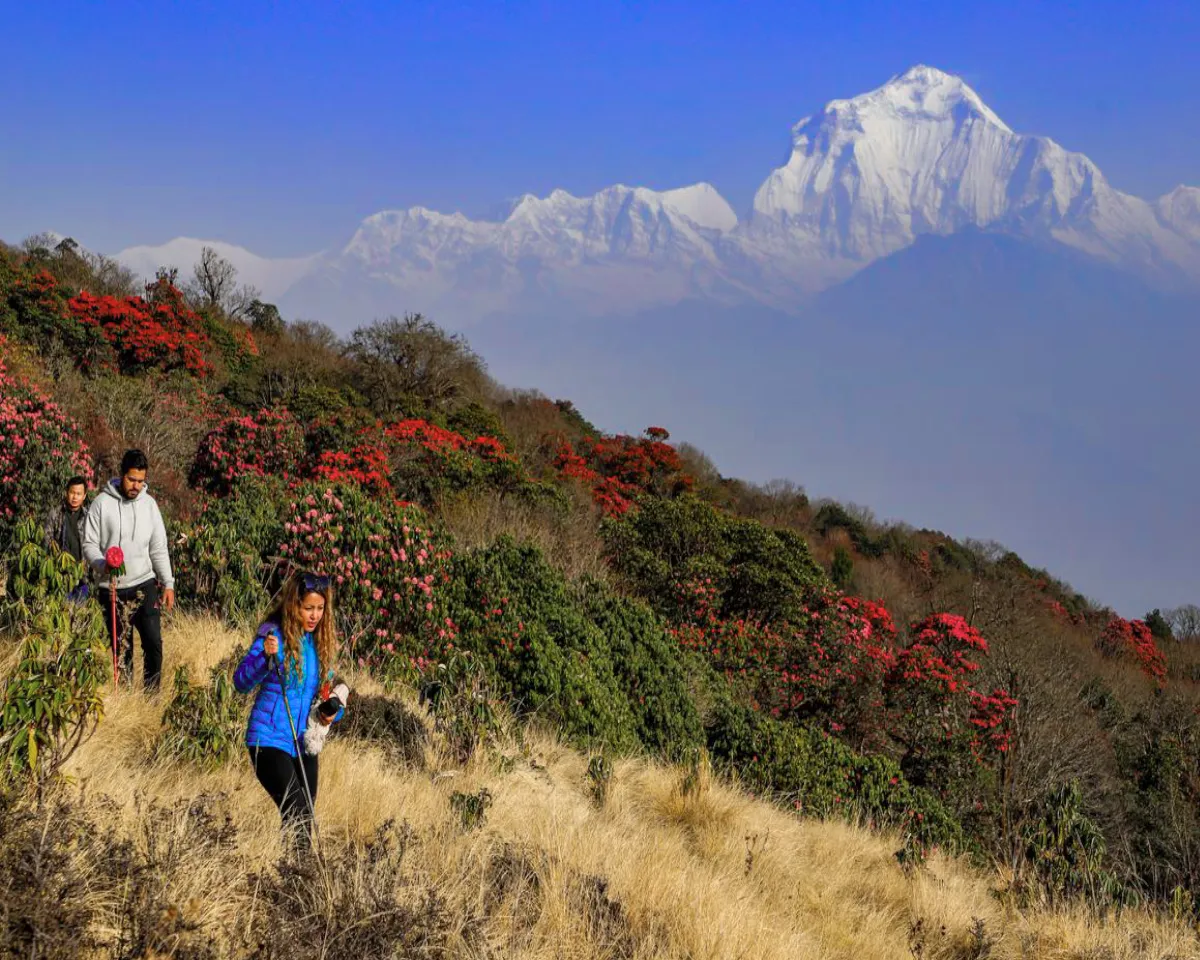
Trek through colorful rhododendron forests, especially beautiful in spring.
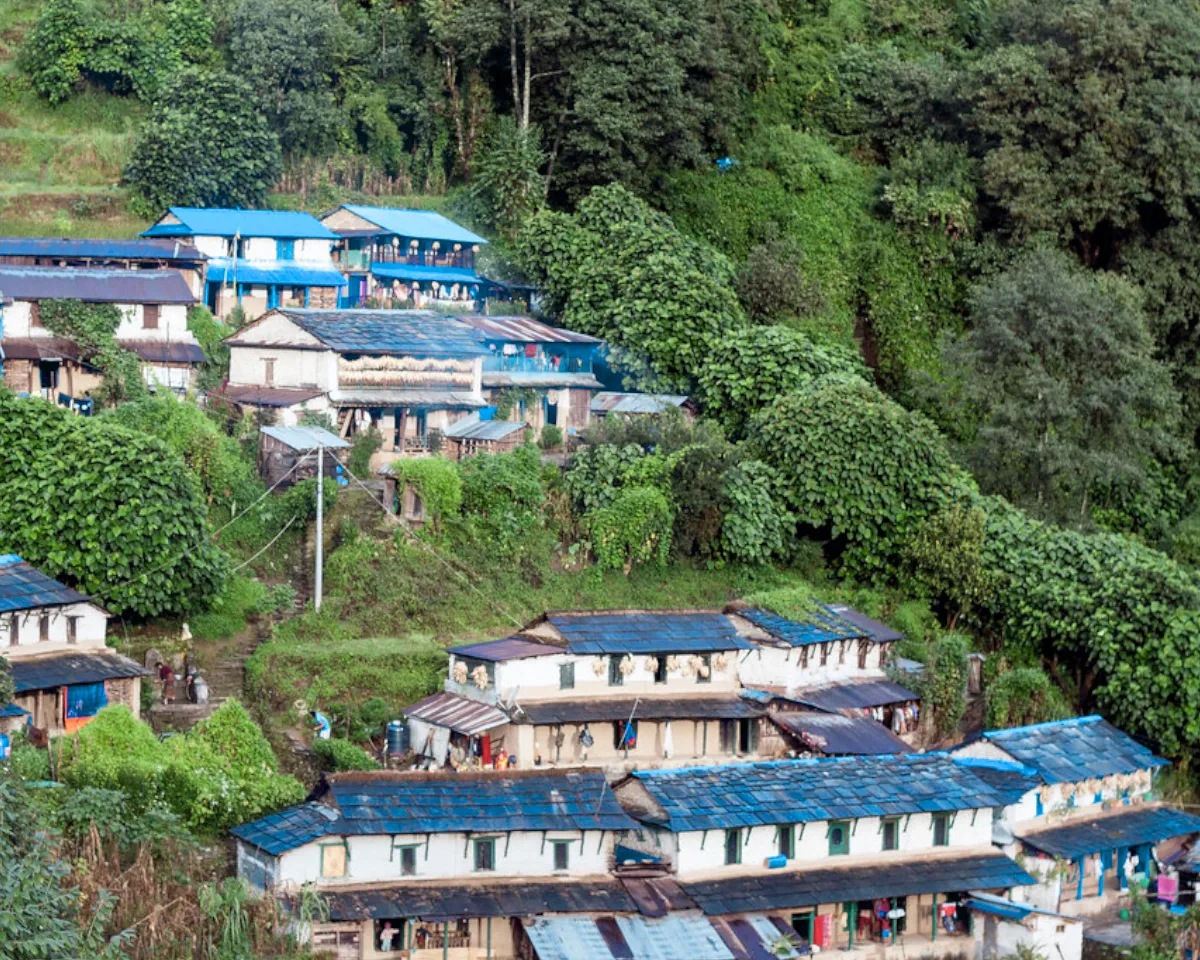
Explore traditional Magar and Gurung villages including Ulleri, Ghorepani, Tadapani, and Ghandruk.
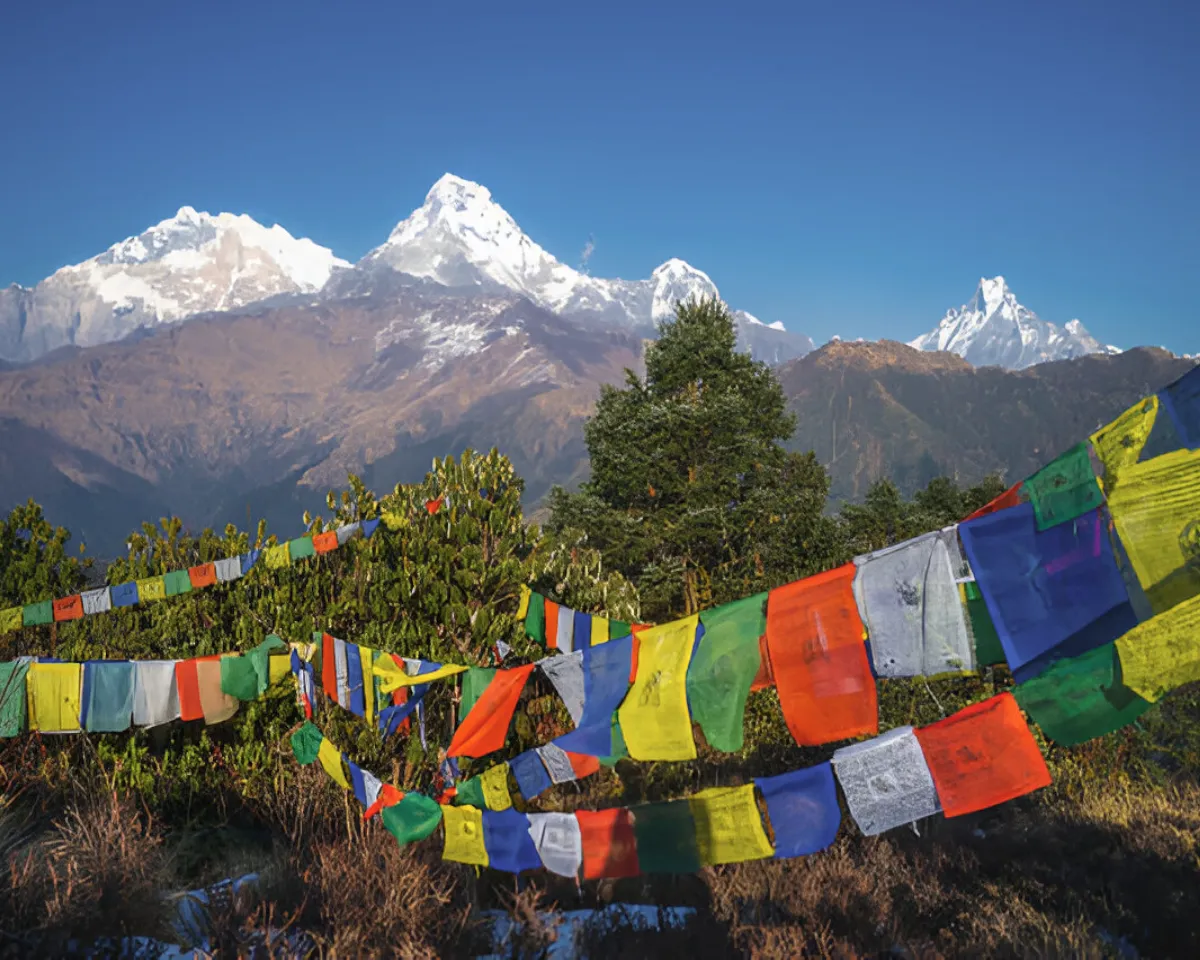
Enjoy close views of Annapurna South, Machhapuchhre, Hiunchuli, Dhaulagiri, and Nilgiri.
Experience a genuine Himalayan trek on a shorter, lower-altitude itinerary.
Overview
Ghorepani Poon Hill Trek is one of the best short Himalayan journeys for travellers who want impressive mountain scenery without committing to a long or extreme high-altitude trek in Nepal. Located in the Annapurna region, the route combines traditional Magar and Gurung villages, rhododendron forests, stone-paved trails, terraced hillsides, and panoramic views of the Annapurna and Dhaulagiri ranges.
The main highlight is an early-morning hike from Ghorepani to Poon Hill at 3,210 metres (10,531 feet). From the viewpoint, clear weather can reveal a broad Himalayan panorama, including Dhaulagiri, Annapurna I, Annapurna South, Hiunchuli, Nilgiri, and Machhapuchhre.
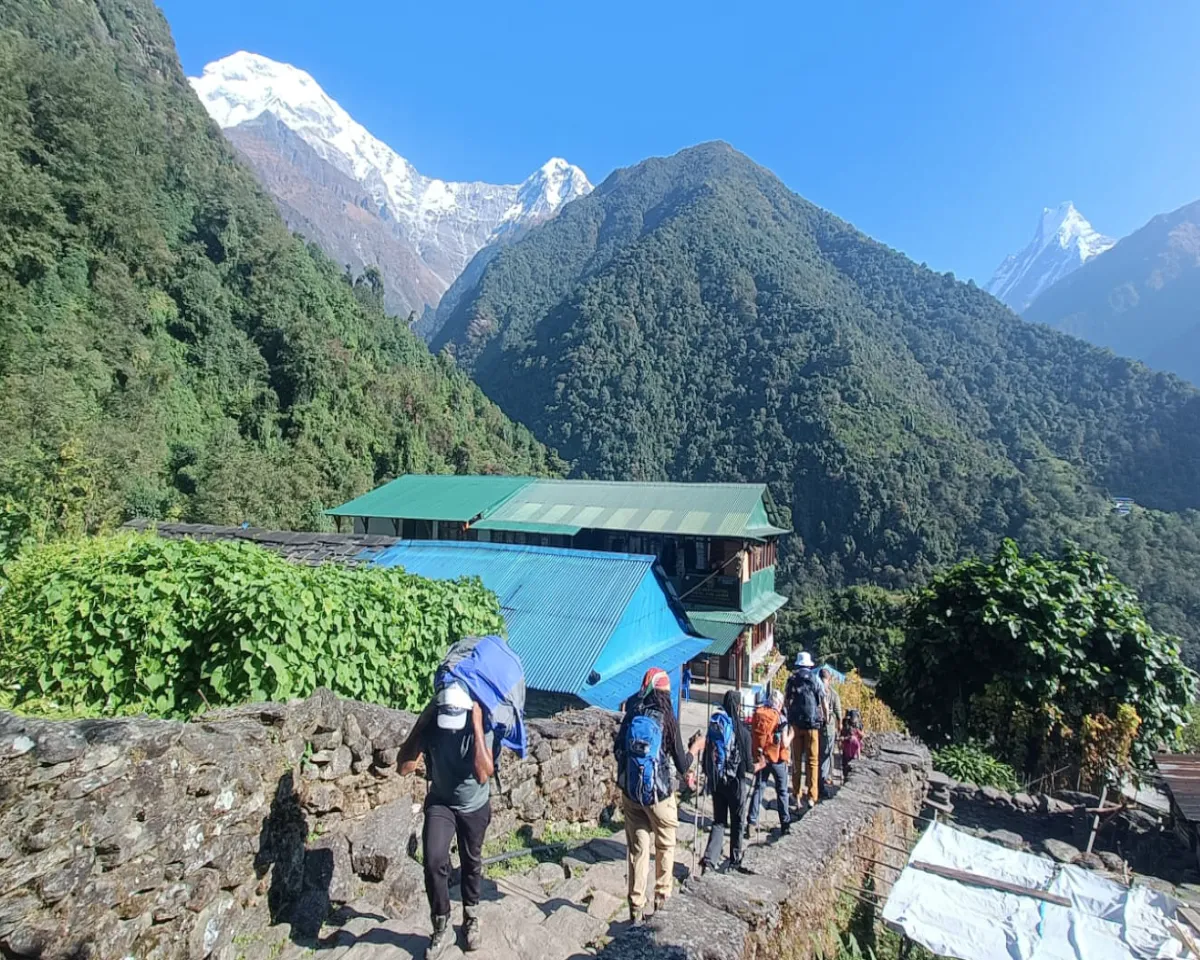
Starting from Pokhara, the trail climbs through Hile and Ulleri before entering beautiful oak and rhododendron forests on the way to Ghorepani. After the Poon Hill sunrise, the journey continues through forested ridges to Tadapani and descends toward the traditional Gurung village of Ghandruk.
Unlike higher Himalayan routes, the Poon Hill Trek does not require crossing high mountain passes or sleeping above 3,000 metres. However, trekkers should still prepare for steep stone staircases, repeated climbs and descents, and several hours of walking each day.
This 9-day Ghorepani Poon Hill Trek from Kathmandu combines trekking with comfortable travel days in Kathmandu and Pokhara. Ambassador Himalaya Treks & Expedition organises the journey with experienced local guides, practical transportation, teahouse accommodation, and careful day-to-day planning.
Why Choose Ghorepani Poon Hill Trek?
The Ghorepani Poon Hill Trek offers an excellent mix of Himalayan views, village culture, forests, and manageable altitude in a relatively short journey.
Its biggest advantage is accessibility. Trekkers can experience the Annapurna region without spending two or three weeks in the mountains or climbing above 4,000 metres. Poon Hill reaches 3,210 metres, while the main trekking nights remain lower. This reduces the altitude challenge compared with Annapurna Base Camp, Everest Base Camp, or the Annapurna Circuit.
The route also offers considerable variety. One day involves stone staircases and farming villages, another passes through rhododendron forest, and the following morning brings panoramic sunrise views over some of Nepal’s highest mountains.
For travellers with limited holiday time, first-time trekkers, couples, families with active older children, and photographers, it offers a practical introduction to trekking in Nepal.
Who Is This Trek For?
The Ghorepani Poon Hill Trek suits beginners, recreational hikers, families, couples, small groups, and travelers who want a shorter Himalayan experience.
Previous trekking experience isn’t required, but reasonable fitness is necessary. Trekkers should be comfortable walking approximately four to seven hours on mountain trails for several consecutive days.
The main physical challenge comes from steep stone staircases, particularly around Ulleri, and repeated uphill and downhill sections rather than extreme altitude. The descent from Tadapani toward Ghandruk can also place pressure on the knees.
Regular walking, stair climbing, cycling, jogging, or other cardiovascular exercise before arriving in Nepal makes the trek more comfortable.
It is also a good choice for travelers unsure whether they are ready for longer routes such as Annapurna Base Camp or the Annapurna Circuit.
Best Time for Ghorepani Poon Hill Trek
The best seasons for the Ghorepani Trek are generally spring (March to May) and autumn (September to November). Nepal Tourism Board lists the same periods as the main trekking seasons for the Annapurna Conservation Area.
Spring offers warmer conditions and blooming rhododendron forests, making it particularly attractive for nature lovers and photographers. Autumn normally provides clear skies, stable weather, and strong Himalayan visibility after the summer monsoon.
Winter from December to February is also possible because the trek remains relatively low. Mornings and nights can be cold, and occasional snow may reach Ghorepani and Poon Hill.
The monsoon period from June to August brings heavy rainfall to the southern Annapurna foothills. Trails can become wet and slippery, cloud cover may reduce mountain visibility, and road disruption is more likely. Pokhara and its surrounding region receive substantial monsoon rainfall.
Difficulty and Acclimatization
The Poon Hill Trek is generally considered an easy-to-moderate trek, but describing it as completely easy can be misleading.
The route includes long stone staircases, uneven trails, forest climbs, and repeated ascents and descents. The climb toward Ulleri is often the first major physical test, while the Poon Hill morning begins before sunrise and is followed by another full trekking day.
The highest point is Poon Hill at 3,210 metres, while Ghorepani, the highest overnight stop on this itinerary, sits around 2,860–2,880 metres.
Because sleeping elevations remain relatively moderate, a separate acclimatisation day is normally unnecessary. However, travellers should still walk at a comfortable pace, stay hydrated, eat properly, and inform their guide if they feel unwell.
Good general fitness is more important on this trek than previous high-altitude experience.
Accommodation and Meals
Accommodation during the trekking section is mainly in locally operated teahouses and mountain lodges. The Annapurna region has a well-established network of trekking lodges.
Rooms are generally simple and comfortable, usually with twin beds, mattresses, pillows, blankets, and basic furnishings. Some lodges have attached bathrooms, while shared bathrooms remain common in mountain villages.
Ghorepani and Ghandruk have comparatively good trekking infrastructure because they are established tourism centers.
Teahouse menus normally include Nepali and international-style dishes such as dal bhat, noodles, fried rice, soups, potatoes, pasta, eggs, bread, porridge, and seasonal vegetables.
Breakfast, lunch, and dinner can be arranged during trekking days. Trekkers should also carry a reusable water bottle and use safe drinking-water options recommended by the guide rather than relying on untreated water.
Why Trek With Ambassador Himalaya?
Ambassador Himalaya Treks & Expedition organizes the Ghorepani Poon Hill Trek with experienced local guides, carefully planned walking stages, and practical ground arrangements from Kathmandu.
Our team manages transportation, trekking accommodation, permits, guides, porters (where required), and day-to-day logistics so travelers can focus on the journey.
Although Poon Hill is a shorter and lower-altitude trek, good organization still matters. Weather, road conditions, lodge availability, trail conditions, and individual fitness can affect each day of trekking.
Our guides know the Annapurna region and can adjust walking pace, rest stops, and daily arrangements to suit the group.
For travelers seeking a short but meaningful introduction to Nepal’s mountains, the Ghorepani Poon Hill Trek from Kathmandu offers a balanced mix of Himalayan views, forest walking, local culture, and comfortable travel with Ambassador Himalaya Treks & Expedition.
Itinerary
Your Ghorepani Poon Hill Trek begins when you arrive at Tribhuvan International Airport in Kathmandu. After immigration and baggage collection, a representative from Ambassador Himalaya Treks & Expedition will welcome you in the arrival terminal, then transfer you to your hotel.
After check-in, you can rest following your international journey. If you arrive in the early morning or early afternoon, you can explore nearby streets, exchange currency, buy any missing trekking equipment, or relax at the hotel.
Later, you meet your trekking guide for a trip briefing. Your guide explains the itinerary, expected weather, trail conditions, accommodation, transportation, luggage arrangements, equipment, and practical trekking information. This is also a useful time to check your walking boots, waterproof clothing, trekking poles, daypack, and other personal equipment before leaving Kathmandu. The evening remains free for rest and preparation.
Overnight in Kathmandu.
Altitude Gain
1,400 m
Accommodation
3*** Hotel
Driving Time: Approx. 7–9 hours
After breakfast, we leave Kathmandu and travel west toward Pokhara, the main gateway to trekking in the Annapurna region. Nepal Tourism Board identifies Pokhara as the principal departure point for popular treks throughout the Annapurna area.
The drive follows Nepal’s middle hills through river valleys, terraced farmland, roadside settlements, market towns, and forested slopes.
Much of the journey follows the Trishuli and later Marsyangdi river corridors before turning toward Pokhara.
Road conditions, construction, traffic, and weather can affect travel time, so we treat today as a full travel day.
After reaching Pokhara, we transfer to our hotel near Lakeside. The remainder of the afternoon or evening is free. You can take a gentle walk beside Phewa Lake, buy last-minute trekking items, or rest before heading into the mountains tomorrow.
Overnight in Pokhara.
Altitude Gain
850m
Accommodation
3*** Hotel
Meal
Breakfast
Driving Time: Approx. 2.5–3.5 hours
Trekking Distance: Approx. 4–6 km
Trekking Time: Approx. 3–4 hours
After breakfast, we leave Pokhara by road and travel toward the lower Annapurna foothills. The journey passes through rural settlements, terraced farmland, river valleys, and increasingly mountainous scenery before reaching the trekking area around Hile.
From Hile, we begin the walking section of our journey.
The trail passes through the settlement of Tikhedhunga and crosses streams and suspension bridges before reaching the most demanding part of the day—the long stone staircase toward Ulleri.
The climb is steep and can feel challenging, especially because this is our first trekking day. We therefore maintain a comfortable pace and take regular short breaks.
Eventually, we reach Ulleri, a traditional Magar village situated high above the valley. The surrounding hills, terraced farms, stone houses, and first glimpses toward the Annapurna region create a strong introduction to village trekking in Nepal. After reaching our lodge, we rest and prepare for tomorrow’s longer forest walk.
Overnight in Ulleri.
Altitude Gain
2,050 m
Accommodation
Tea House
Meal
Breakfast, lunch & Dinner
Trekking Distance: Approx. 8–10 km
Trekking Time: Approx. 5–6 hours
After breakfast, we continue uphill from Ulleri toward Ghorepani.
The trail first passes through cultivated areas and small settlements before entering beautiful oak and rhododendron forests. We walk through Banthanti and continue to Nangethanti, where small teahouses offer good places to rest and refresh.
The ascent remains gradual but continuous.
As we gain elevation, temperatures become cooler, and the forest grows denser. Spring is particularly attractive along this section because rhododendrons bloom throughout the Annapurna Conservation Area. Nepal Tourism Board specifically notes rhododendron vegetation as an important feature of the region.
Eventually, we reach Ghorepani at approximately 2,860–2,880 metres. The village is an established trekking stop and the main overnight base for the early-morning hike to Poon Hill.
When the weather is clear, the surrounding area offers excellent views of the Dhaulagiri and Annapurna ranges. We eat dinner early, pack warm clothing, and prepare headlamps for the next morning.
Overnight in Ghorepani.
Altitude Gain
2,874 m
Accommodation
Tea House
Meal
Breakfast, Lunch & Dinner
Trekking Distance: Approx. 9–12 km
Trekking Time: Approx. 6–7 hours
We wake before sunrise and begin the uphill walk toward Poon Hill at 3,210 metres, the highest point of the trek. The climb normally takes around 45 minutes to one hour, depending on walking pace.
At the viewpoint, clear weather reveals an impressive Himalayan panorama. Dhaulagiri, Annapurna I, Annapurna South, Hiunchuli, Nilgiri, and Machhapuchhre are among the major mountains visible from the area. As the sun rises, changing light across the snow-covered mountains creates the signature Ghorepani Poon Hill Trek experience.
After enjoying the views, we descend to Ghorepani for breakfast.
We then leave the village and climb through forested ridges toward Deurali, then descend and climb again through rhododendron woodland. Unlike the straightforward climb to Ghorepani, this section contains repeated ups and downs, so the day remains physically active even after the sunrise hike.
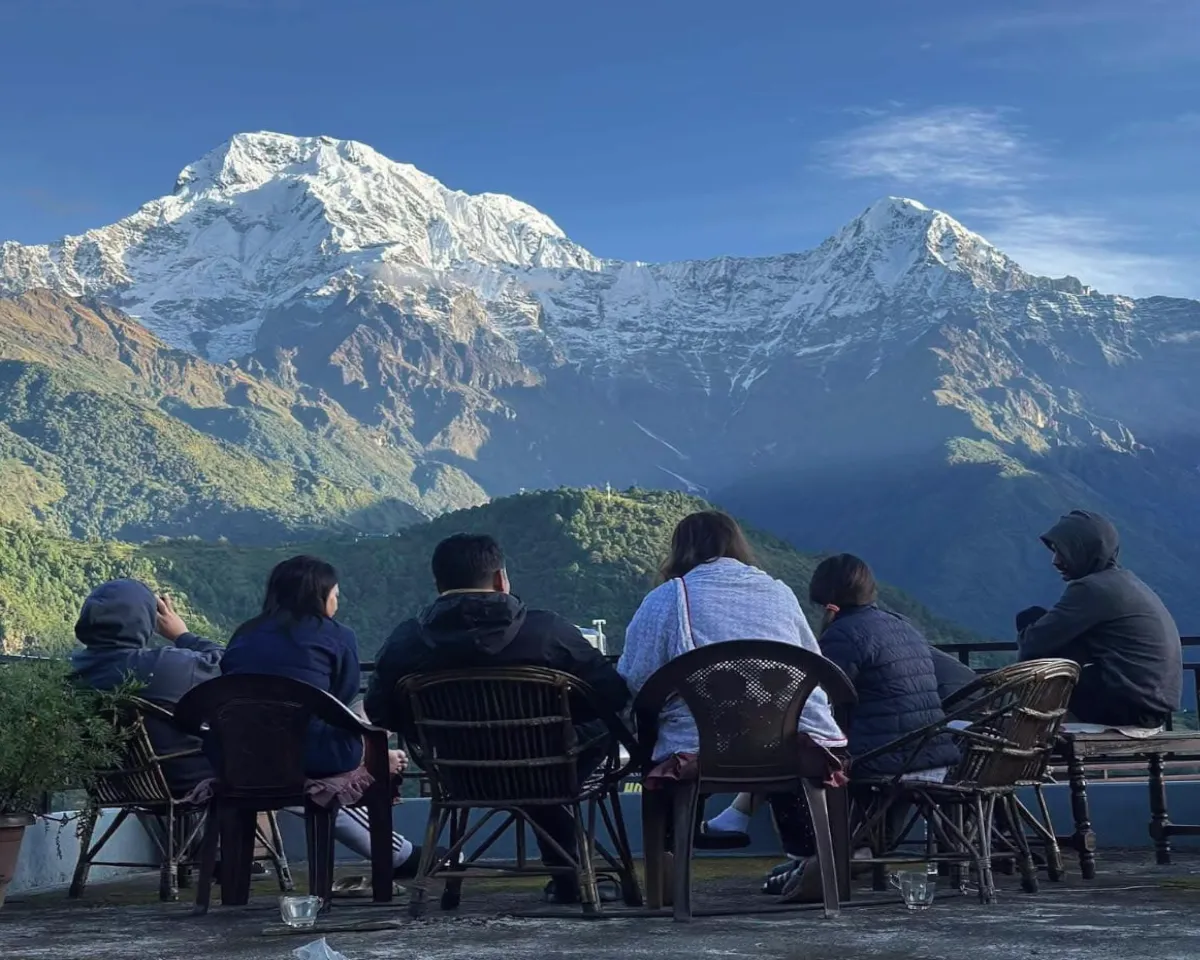
Eventually, we reach Tadapani, a small forest settlement with beautiful views toward Annapurna South, Hiunchuli, and Machhapuchhre when skies remain clear.
Overnight in Tadapani.
Altitude Gain
3,210 m
Accommodation
Tea House
Meal
Breakfast, Lunch & Dinner
Driving Time: Approx. 2.5–3.5 hours
Trekking Distance: Approx. 6–8 km
Trekking Time: Approx. 3–4 hours
After breakfast, we leave Tadapani and begin descending toward Ghandruk. The trail passes through peaceful oak, bamboo, and rhododendron forests. Much of today’s route is downhill, making it easier on the lungs but requiring care on knees and ankles.
As we approach Ghandruk, the forest gradually opens into farmland and village surroundings.
Ghandruk is one of the best-known Gurung settlements in the Annapurna region. Traditional stone houses, narrow lanes, mountain views, and Gurung cultural heritage make the village more than simply a trekking stop. Nepal Tourism Board highlights Ghandruk as one of the important experiences in the Annapurna Conservation Area.
Depending on timing, you can walk through the village before continuing to the road-access point. We then meet our vehicle and drive back to Pokhara. After checking into the hotel, the evening is free for a comfortable shower, a Lakeside walk, a good meal, or well-earned rest.
Overnight in Pokhara.
Altitude Gain
2,630 m
Accommodation
3*** Hotel
Meal
Breakfast & Lunch
Today is a full day of sightseeing and relaxation in Pokhara.
After several days on mountain trails, this slower schedule gives your body time to recover while letting you experience one of Nepal’s most attractive tourist cities.
Depending on weather and your interests, sightseeing can include Phewa Lake, Davis Falls, Gupteshwor Mahadev Cave, the World Peace Pagoda, and the amazing International Mountain Museum.
Travellers who want another mountain viewpoint may also consider an early-morning visit to Sarangkot when weather conditions are favourable.
You do not need to make this a rushed sightseeing day. Spending time beside Phewa Lake, enjoying the Lakeside area, shopping for local products, or relaxing in cafés can be equally worthwhile after the trek. The day also provides useful flexibility if earlier mountain travel has been affected by minor weather or transportation delays.
Overnight in Pokhara.
Altitude Gain
850m
Accommodation
3*** Hotel
Meal
Breakfast
Driving Time: Approx. 7–9 hours
After breakfast, we leave Pokhara and travel back toward Kathmandu. The drive follows familiar river valleys, farming landscapes, forested hills, roadside communities, and market towns.
Actual travel time varies because of highway traffic, road construction, weather, and local road conditions. For this reason, we avoid planning important activities immediately after the expected arrival time.
We will transfer you to your hotel after you reach Kathmandu. The rest of the evening remains free. You may walk through Thamel, shop for souvenirs, enjoy a final Nepali dinner, or relax.
By this stage, you have completed a journey combining Kathmandu, Pokhara, the Annapurna foothills, Poon Hill sunrise, traditional Magar and Gurung communities, and several days of Himalayan trekking.
Overnight in Kathmandu.
Altitude Gain
1,400 m
Accommodation
3*** Hotel
Meal
Breakfast & Lunch
Today marks the end of your 9-day Ghorepani Poon Hill Trek from Kathmandu.
Depending on your departure schedule, you may have some free time for breakfast, final shopping, or a short walk near your hotel.
A representative from Ambassador Himalaya Treks & Expedition will assist you and transfer you to Tribhuvan International Airport, with enough time for airline check-in, security, and immigration.
Not satisfied with this Itinerary?
Are you interested on planning custom trip? It only takes 2 minutes.
Want to know more about this trek?
Chat with us — real trekking experts, not bots.
Online now
Elevation Chart
Want to know more about this trek?
Chat with us — real trekking experts, not bots.
Online now
Equipment
- Trekking Poles: Improve balance and reduce knee strain on steep trails.
- Backpack: 25–35L with a porter; 40–60L for independent trekking.
- Water Bottles: Carry reusable bottles for regular hydration.
- Trekking Boots: Comfortable, durable boots with good grip and support.
- Headlamp: Essential for early starts and evenings.
- Dry Bags / Zip-Locks: Keep clothes and valuables dry and organized.
- Backpack Rain Cover: Protects your gear from rain and snow.
- Sunglasses: UV protection is essential at high altitude.
- Sun Hat / Cap: Protects against strong mountain sun.
- Packing Organizers: Keep your backpack neat and easy to manage.
- Micro spikes: Useful for icy and slippery trails.
- Thermal Base Layer: Provides warmth in cold conditions.
- Fleece Jacket: Lightweight insulation for chilly weather.
- Quick-Dry T-Shirts: Comfortable and easy to wash and dry.
- Trekking Pants: Choose lightweight, comfortable, and durable trousers.
- Waterproof / Windproof Jacket: Essential protection from changing mountain weather.
- Waterproof Pants: Useful during rain and snow.
- Down Jacket: Essential for cold mornings and high-altitude nights.
- Trekking Socks: Carry several pairs for dry, comfortable feet.
- Gloves: Bring lightweight liners and warm, windproof gloves.
- Woolen Hat / Beanie: Keeps your head warm.
- Neck Gaiter: Protects against cold, wind, dust, and sun.
- Undergarments: Pack enough for the entire trek.
- Comfortable Teahouse Clothes: Warm clothes for relaxing after trekking.
- Sleeping Bag: Choose one suitable for the season and altitude.
- Sleeping Bag Liner: Adds warmth and keeps your sleeping bag clean.
- Earplugs: Helpful in shared teahouse rooms.
- Travel Pillow: Adds comfort while resting.
- Eye Mask: Useful for shared rooms and early daylight.
- Microfiber Towel: Lightweight and quick-drying.
- Toothbrush & Toothpaste: Basic daily hygiene.
- Wet Wipes: Useful when showers are unavailable.
- First Aid & Blister Kit: For minor injuries and foot care.
- Sunscreen & Lip Balm: Protect against strong UV, wind, and dry air.
- Soap / Shampoo: Carry travel-sized or biodegradable options.
- Toilet Paper & Hand Sanitizer: Essential trail items.
- Personal Hygiene Supplies: Include menstrual products and other personal needs.
- Water Purification Tablets / Filter: Useful as a backup for safe drinking water.
- Mobile Phone & Camera: For communication, navigation, and photos.
- Power Bank: Useful where charging facilities are limited.
- Charging Cables: Carry cables for all essential devices.
- Travel Adapter: Nepal uses Type C, D, and M sockets.
- GPS Watch / Device: Optional for navigation and tracking.
- Earphones: For music, podcasts, or entertainment.
- Sandals / Lightweight Shoes: Comfortable for evenings at the teahouse.
- Gaiters: Keep snow, mud, and debris out of your boots.
- Multitool & Repair Kit: Useful for small gear repairs.
- Insulated Flask: Keeps drinks warm in cold conditions.
- Journal & Pen: Record your Himalayan memories.
- Playing Cards / Small Games: Great for relaxing evenings.
- Nepali Rupees: Carry cash for snacks, tea, charging, tips, and small expenses.
- Energy Snacks: Carry bars, nuts, chocolate, or trail mix.
- Electrolytes: Useful for hydration during long and strenuous trekking days.
Want to know more about this trek?
Chat with us — real trekking experts, not bots.
Online now
Review Requests
Enter a recent customer’s contact info and we’ll ask them to leave you a review.
What they say!
